Pale Oak (BM OC-20) vs Agreeable Gray (SW 7029)
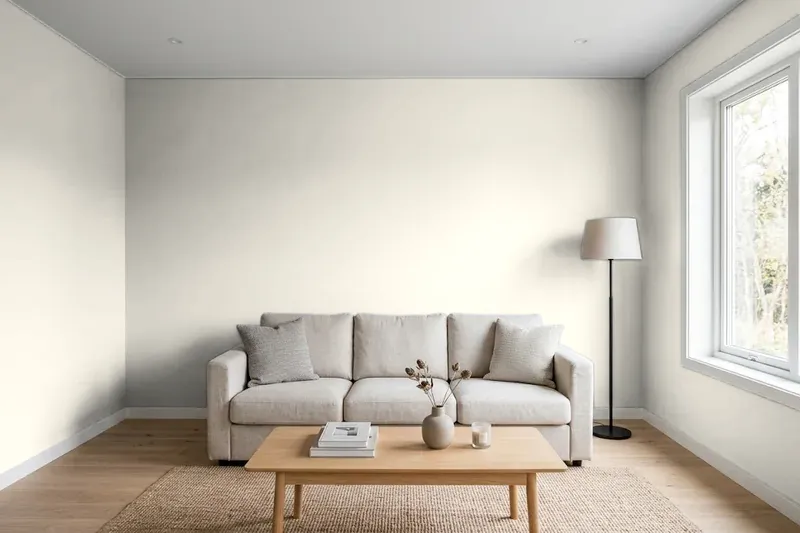
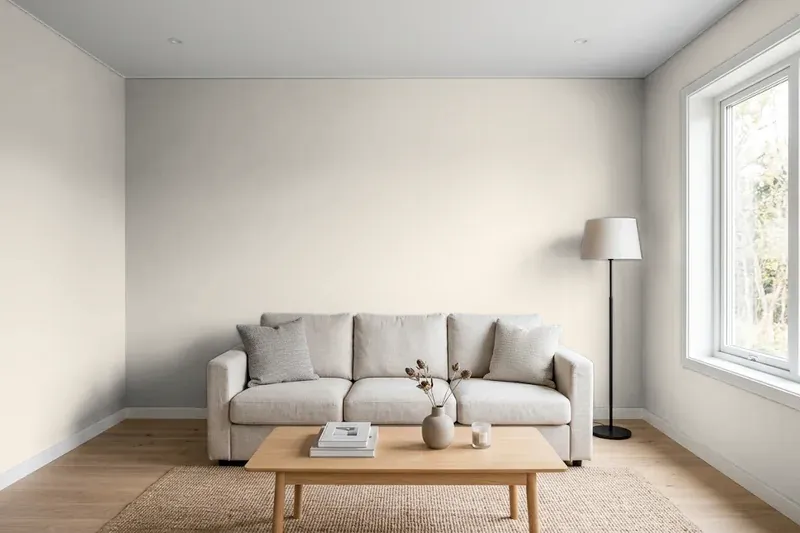
AI-made illustrative room; our code paints the walls. Screen colors vary; test a sample before you paint.
Quick decision
- Lighter
- Pale Oak (LRV, how much light the paint reflects: 68.6 vs 60).
- Warmer
- About the same warmth (Lab b*, the yellow-to-blue number, 5.9 vs 5.7).
- North rooms
- Pale Oak: keeps more brightness (L*, the lightness number, 82.8 vs 77.9 in north light) and drifts less gray (chroma, the color strength, drop 4.0 vs 4.6).
- Trim that works
- Pink Damask BM 890, #F6F0E7, LRV 85.5: a Benjamin Moore white lighter than both.
- Closeness
- deltaE, how different two colors look: 3.4, noticeably different. At 3.4, test both: on a full wall the difference will show.
See each color
More comparisons with Agreeable Gray
Pale Oak (BM OC-20) is lighter than Agreeable Gray (SW 7029), and about the same warmth: LRV 68.6 vs 60, deltaE 3.4 (noticeably different).
Side by side
| Measure | Pale Oak | Agreeable Gray | Gap |
|---|---|---|---|
| Brand | Benjamin Moore | Sherwin-Williams | |
| Color code | OC-20 | SW 7029 | |
| Hex | #DDD9CE | #D1CBC1 | |
| RGB | 221, 217, 206 | 209, 203, 193 | |
| HSL | 44°, 18%, 84% | 37°, 15%, 79% | |
| LRV (light reflectance value) | 68.6 | 60 | +8.6 |
| Lab L* | 86.7 | 81.9 | +4.8 |
| Lab a* | -0.5 | 0.3 | −0.8 |
| Lab b* | 5.9 | 5.7 | +0.2 |
| Undertone (PaintDB) | Warm Greige | Warm Beige | |
| Temperature (PaintDB) | warm | warm | |
| Color family | Greige | Greige |
Same paint, two kinds of light
Pale Oak (BM OC-20), published as #DDD9CE
#CCCFCC
#EFE3CE
Agreeable Gray (SW 7029), published as #D1CBC1
#C0C1BF
#E3D5C1
These swatches and the rooms above are a simulation, not a measurement. How the visualizer works
Which should you pick
Counts computed from the LRV and Lab values in the table above; no room test was done.
| Room or job | Pick | Why |
|---|---|---|
| North-facing room | Pale Oak | Pale Oak stays brighter and drifts less gray in north light (L* 82.8 vs 77.9; chroma drop 4.0 vs 4.6). |
| South-facing room | Either | About the same (Lab b* 5.9 vs 5.7). |
| Whole-house color | Either | About the same (chroma 5.9 vs 5.7). |
Closest matches to Pale Oak in other brands
Closest matches to Agreeable Gray in other brands
Common questions
- Is Pale Oak the same color as Agreeable Gray?
- They are noticeably different: a CIEDE2000 difference of 3.4. Most people can see the difference between Pale Oak and Agreeable Gray side by side.
- Which is lighter, Pale Oak or Agreeable Gray?
- Pale Oak, with an LRV of 68.6 against 60.
- Which is warmer, Pale Oak or Agreeable Gray?
- Neither: both have about the same Lab b* (5.9 against 5.7).
- Can you use Pale Oak and Agreeable Gray together in one room?
- Yes, as a subtle tone-on-tone pairing (deltaE 3.4; LRV gap 8.6).
- What trim color goes with Pale Oak and Agreeable Gray?
- Pink Damask (BM 890), #F6F0E7, LRV 85.5: a Benjamin Moore white lighter than both. It sits 16.9 LRV points from Pale Oak and 25.5 from Agreeable Gray.
Full pages
Related comparisons
Sources: Pale Oak: LRV and hex from Benjamin Moore technical data (verified 2026-10-02); Agreeable Gray: LRV and hex as published by the manufacturer, via PaintDB (CC BY 4.0). Color differences are CIEDE2000 values computed by this site from the hex values (data snapshot 2026-10-01). Color names and codes belong to their manufacturers.