Potentially Purple (SW 6821)
Potentially Purple (SW 6821) from Sherwin-Williams has an LRV of 62; its closest match in another brand is Light Mulberry (Behr 650C-3) from Behr (deltaE 1.2, very close).
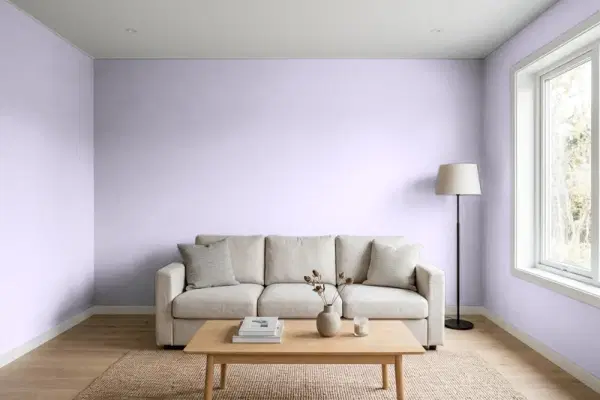
AI-made illustrative room; our code paints the walls. Screen colors vary; test a sample before you paint.
Potentially Purple (SW 6821) is a light color from Sherwin-Williams that PaintDB files under Purple: LRV, how much light the paint reflects, is 62, so it reflects about 62 percent of the light that hits it.
Colors that go with Potentially Purple
Four Sherwin-Williams colors picked for Potentially Purple by this site's color math: a light trim color, a deeper purple, a contrast from another family, a dark accent. Sherwin-Williams did not choose these pairings.
Closest match in every other brand
Each brand's closest color to Potentially Purple, ranked by deltaE, how different two colors look (the CIEDE2000 formula): under 1.0 is indistinguishable, 1.0 to under 2.3 very close, 2.3 to 5.0 noticeably different, over 5.0 clearly different.
| Brand | Closest color | Code | LRV | deltaE | How close |
|---|---|---|---|---|---|
| Benjamin Moore | French Lilac | 1403 | 56.1 | 2.3 | noticeably different |
| Behr | Light Mulberry | 650C-3 | 61.2 | 1.2 | very close |
| Valspar | Purpling Dawn | 1001-6B | 65 | 2.4 | noticeably different |
| PPG Paints | Dusky Lilac | 1176-3 | 62 | 2.7 | noticeably different |
Best rooms for Potentially Purple
Potentially Purple reads cool: its color strength (chroma) is 10.8, at or above this site's tinted line of 7.9.
| Room | Why |
|---|---|
| North-facing room | Keeps more brightness than 6 in 10 colors here in north light (L*, the lightness number, 78.7), and loses less color than 6 in 10 colors here (chroma drop under 0.1). |
| South-facing room | Cooler than 8 in 10 colors here in south light (Lab b*, the yellow-to-blue number, -3.1). |
| Small or dim room | Lighter than 6 in 10 colors here (LRV 62). |
| Large sunny room | Lighter than 6 in 10 colors here (LRV 62). |
| Whole house | Less colorful than 6 in 10 colors here (chroma 10.8). |
Counts computed from the LRV and Lab values in this table; no room test was done.
Other paints named Potentially Purple
Lighter and darker in Sherwin-Williams
The Sherwin-Williams purple colors nearest to Potentially Purple (LRV 62) by LRV.
Lighter than Potentially Purple
Darker than Potentially Purple
Color data
| Brand | Sherwin-Williams |
|---|---|
| Color code | SW 6821 |
| Hex | #D1CBDF |
| RGB | 209, 203, 223 |
| HSL | 258°, 24%, 84% |
| LRV (light reflectance value) | 62 |
| Lab L*, a*, b* | 82.7, 5.8, -9.1 |
| Undertone (PaintDB) | Cool |
| Temperature (PaintDB) | cool |
| Color family | Purple |
Same paint, two kinds of light
Potentially Purple (SW 6821), published as #D1CBDF
#BFC1DD
#E4D5DF
These swatches and the rooms above are a simulation, not a measurement. How the visualizer works
Similar shades from Sherwin-Williams
More from Sherwin-Williams
Common questions
- What is the LRV of Potentially Purple (SW 6821)?
- Potentially Purple has an LRV of 62. LRV runs from 0 (black) to 100 (pure white) and measures the share of light a surface reflects, so Potentially Purple is a light color.
- What is the closest match to Potentially Purple in another brand?
- Light Mulberry (Behr 650C-3) from Behr, at a deltaE of 1.2 (very close).
- Is Potentially Purple warm or cool?
- Potentially Purple reads cool: its chroma is 10.8, at or above this site's tinted line of 7.9. Its Lab b* value is -9.1; a higher b* is warmer and yellower, a lower one cooler and bluer.
- What colors go with Potentially Purple?
- Potentially Purple goes with Cotton Candy (SW 9692) as a light trim color, Gentle Grape (SW 9074) as a deeper purple, Cascade Green (SW 0066) as a contrast from another family, Quixotic Plum (SW 6265) as a dark accent. This site's color math picked them from Sherwin-Williams's colors; Sherwin-Williams did not choose these pairings.
- Is Potentially Purple good for a north-facing room?
- In north light, Potentially Purple keeps more brightness than 6 in 10 colors here (L* 78.7) and loses less color than 6 in 10 (chroma drop under 0.1).
Sources: LRV and hex as published by the manufacturer, via PaintDB (CC BY 4.0). Color differences are CIEDE2000 values computed by this site from the hex values (data snapshot 2026-10-01). Color names and codes belong to their manufacturers.