Pale Taupe (PPG 1073-3)
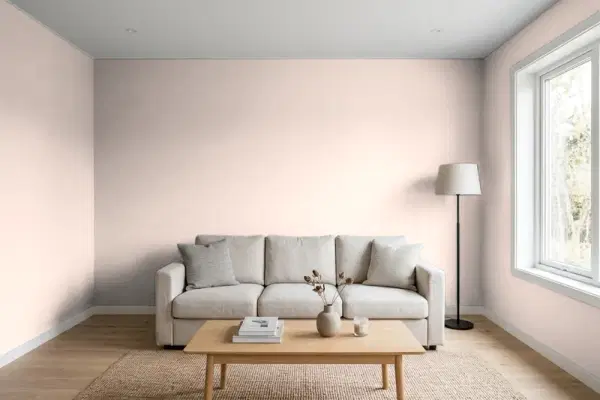
Illustrative room. Screen colors vary; test a sample before you paint.
Pale Taupe (PPG 1073-3) is a light, warm greige from PPG Paints: LRV 66, so it reflects about 66 percent of the light that hits it.
Colors that go with Pale Taupe
Four PPG Paints colors picked for Pale Taupe by this site's color math: a trim white, a deeper greige, a quiet contrast from another family, a dark accent. PPG Paints did not choose these pairings.
Closest match in every other brand
Each brand's closest color to Pale Taupe, ranked by CIEDE2000 (deltaE): under 1.0 is indistinguishable, 1.0 to 2.3 very close, 2.3 to 5 noticeably different, over 5 clearly different.
| Brand | Closest color | Code | LRV | deltaE | How close |
|---|---|---|---|---|---|
| Sherwin-Williams | Malted Milk | SW 6057 | 62 | 2.4 | noticeably different |
| Benjamin Moore | Light Mocha | 2096-60 | 63.2 | 1.0 | very close |
| Behr | Sugar Berry | 180E-2 | 67.8 | 1.4 | very close |
| Valspar | Champagne Glee | 2003-10C | 65 | 0.8 | indistinguishable |
Lighter and darker in PPG Paints
The PPG Paints greige colors nearest to Pale Taupe (LRV 66) by LRV.
Lighter than Pale Taupe
Darker than Pale Taupe
Color data
| Brand | PPG Paints |
|---|---|
| Color code | 1073-3 |
| Hex | #E3D1C8 |
| RGB | 227, 209, 200 |
| HSL | 20°, 33%, 84% |
| LRV (light reflectance value) | 66 |
| Lab L*, a*, b* | 85.1, 4.7, 6.7 |
| Undertone | Warm |
| Temperature | warm |
| Color family | Greige |
Same paint, two kinds of light
Pale Taupe (PPG 1073-3), published as #E3D1C8
#D2C7C6
#F5DBC8
These swatches and the rooms above are a simulation, not a measurement. How the visualizer works
Similar shades from PPG Paints
More from PPG Paints
Common questions
- What is the LRV of Pale Taupe (PPG 1073-3)?
- Pale Taupe has an LRV of 66. LRV runs from 0 (black) to 100 (pure white) and measures the share of light a surface reflects, so Pale Taupe is a light color.
- What is the closest match to Pale Taupe in another brand?
- Champagne Glee (Valspar 2003-10C) from Valspar, at a deltaE of 0.8 (indistinguishable).
- Is Pale Taupe warm or cool?
- PPG Paints lists Pale Taupe as warm, with a Warm undertone. Its Lab b* value is 6.7; a higher b* is warmer and yellower, a lower one cooler and bluer.
Sources: LRV and hex as published by the manufacturer, via PaintDB (CC BY 4.0). Color differences are CIEDE2000 values computed by this site from the hex values (data snapshot 2026-10-01). Color names and codes belong to their manufacturers.