Burnished Clay (Behr PPU18-09)
Burnished Clay (Behr PPU18-09) from Behr has an LRV of 60.9; its closest match in another brand is Pediment (SW 7634) from Sherwin-Williams (deltaE 0.5, indistinguishable).
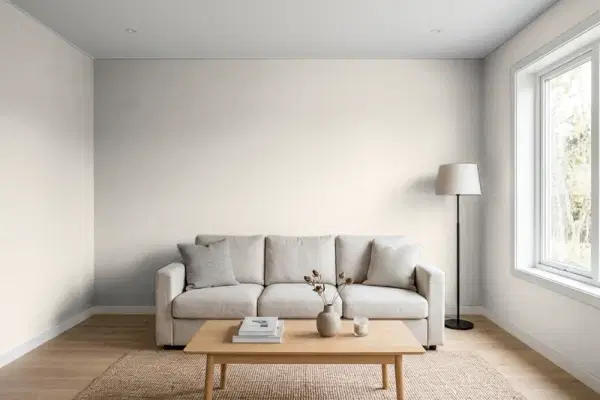
AI-made illustrative room; our code paints the walls. Screen colors vary; test a sample before you paint.
Burnished Clay (Behr PPU18-09) is a light color from Behr that PaintDB files under Gray: LRV, how much light the paint reflects, is 60.9, so it reflects about 61 percent of the light that hits it.
Colors that go with Burnished Clay
Four Behr colors picked for Burnished Clay by this site's color math: a trim white, a deeper gray, a contrast from another family, a dark accent. Behr did not choose these pairings.
Closest match in every other brand
Each brand's closest color to Burnished Clay, ranked by deltaE, how different two colors look (the CIEDE2000 formula): under 1.0 is indistinguishable, 1.0 to under 2.3 very close, 2.3 to 5.0 noticeably different, over 5.0 clearly different.
| Brand | Closest color | Code | LRV | deltaE | How close |
|---|---|---|---|---|---|
| Sherwin-Williams | Pediment | SW 7634 | 61 | 0.5 | indistinguishable |
| Benjamin Moore | Wish | AF-680 | 58.6 | 0.7 | indistinguishable |
| Valspar | Villa Grey | 6005-1B | 61 | 2.5 | noticeably different |
| PPG Paints | Cool Slate | 1002-3 | 61 | 0.97 | indistinguishable |
Best rooms for Burnished Clay
Burnished Clay reads slightly warm: its color strength (chroma) is 4.8, above the neutral line of 4.5 and below the tinted line of 7.9.
| Room | Why |
|---|---|
| North-facing room | Keeps more brightness than 6 in 10 colors here in north light (L*, the lightness number, 78.4), and loses more color than 6 in 10 colors here (chroma drop 4.4). |
| South-facing room | Cooler than 6 in 10 colors here in south light (Lab b*, the yellow-to-blue number, 10.6). |
| Small or dim room | Lighter than 6 in 10 colors here (LRV 60.9). |
| Large sunny room | Lighter than 6 in 10 colors here (LRV 60.9). |
| Whole house | Less colorful than 8 in 10 colors here (chroma 4.8). |
Counts computed from the LRV and Lab values in this table; no room test was done.
Lighter and darker in Behr
The Behr gray colors nearest to Burnished Clay (LRV 60.9, estimated) by LRV.
Lighter than Burnished Clay
Darker than Burnished Clay
Color data
| Brand | Behr |
|---|---|
| Color code | PPU18-09 |
| Hex | #D2CCC4 |
| RGB | 210, 204, 196 |
| HSL | 34°, 13%, 80% |
| LRV (light reflectance value) | 60.9 (estimated from the hex) |
| Lab L*, a*, b* | 82.3, 0.7, 4.7 |
| Undertone (PaintDB) | Warm |
| Temperature (PaintDB) | neutral |
| Color family | Gray |
Same paint, two kinds of light
Burnished Clay (Behr PPU18-09), published as #D2CCC4
#C1C2C2
#E4D6C4
These swatches and the rooms above are a simulation, not a measurement. How the visualizer works
Similar shades from Behr
More from Behr
Common questions
- What is the LRV of Burnished Clay (Behr PPU18-09)?
- Burnished Clay has an LRV of 60.9 (estimated from its hex value). LRV runs from 0 (black) to 100 (pure white) and measures the share of light a surface reflects, so Burnished Clay is a light color.
- What is the closest match to Burnished Clay in another brand?
- Pediment (SW 7634) from Sherwin-Williams, at a deltaE of 0.5 (indistinguishable).
- Is Burnished Clay warm or cool?
- Burnished Clay reads slightly warm: its chroma is 4.8, above the neutral line of 4.5 and below the tinted line of 7.9. Its Lab b* value is 4.7; a higher b* is warmer and yellower, a lower one cooler and bluer.
- What colors go with Burnished Clay?
- Burnished Clay goes with Barely Brown (Behr N180-1) as a trim white, Elephant Skin (Behr PPU18-16) as a deeper gray, Object Of Desire (Behr MQ1-36) as a contrast from another family, French Roast (Behr UL140-1) as a dark accent. This site's color math picked them from Behr's colors; Behr did not choose these pairings.
- Is Burnished Clay good for a north-facing room?
- In north light, Burnished Clay keeps more brightness than 6 in 10 colors here (L* 78.4) and loses more color than 6 in 10 (chroma drop 4.4).
Sources: hex as published by the manufacturer, via PaintDB (CC BY 4.0); LRV is not published by Behr for this color and is estimated here from the color's own hex value. Color differences are CIEDE2000 values computed by this site from the hex values (data snapshot 2026-10-01). Color names and codes belong to their manufacturers.